Dustin Carrión-Ojeda

I am a Ph.D. student and research assistant in the Image and Video Analysis Group at TU Darmstadt and hessian.AI, advised by Prof. Dr. Sc. Simone Schaub-Meyer. I focus on developing efficient and robust computer vision methods for learning from limited data and heterogeneous modalities.

I received my M.Sc. in Artificial Intelligence from Université Paris-Saclay, where I worked with Prof. Isabelle Guyon, and my B.Eng. in Information Technology from Yachay Tech University, advised by Prof. Israel Pineda and Prof. Rigoberto Fonseca-Delgado.

Portrait of Dustin Carrión-Ojeda

Research

I study how visual and multimodal models can remain reliable when annotations, training data, compute, memory, or sensor modalities are limited. My current work spans few-shot classification and segmentation, cross-domain meta-learning, and multimodal learning under practical constraints.

Across these settings, I aim to preserve spatial detail and generalization while reducing data and deployment costs. My earlier work on EEG biometrics pursued the same efficiency question at the signal-acquisition level, identifying how much recording time, which channels, and which features are sufficient for accurate identification.

Updates

Publications

* Equal contribution

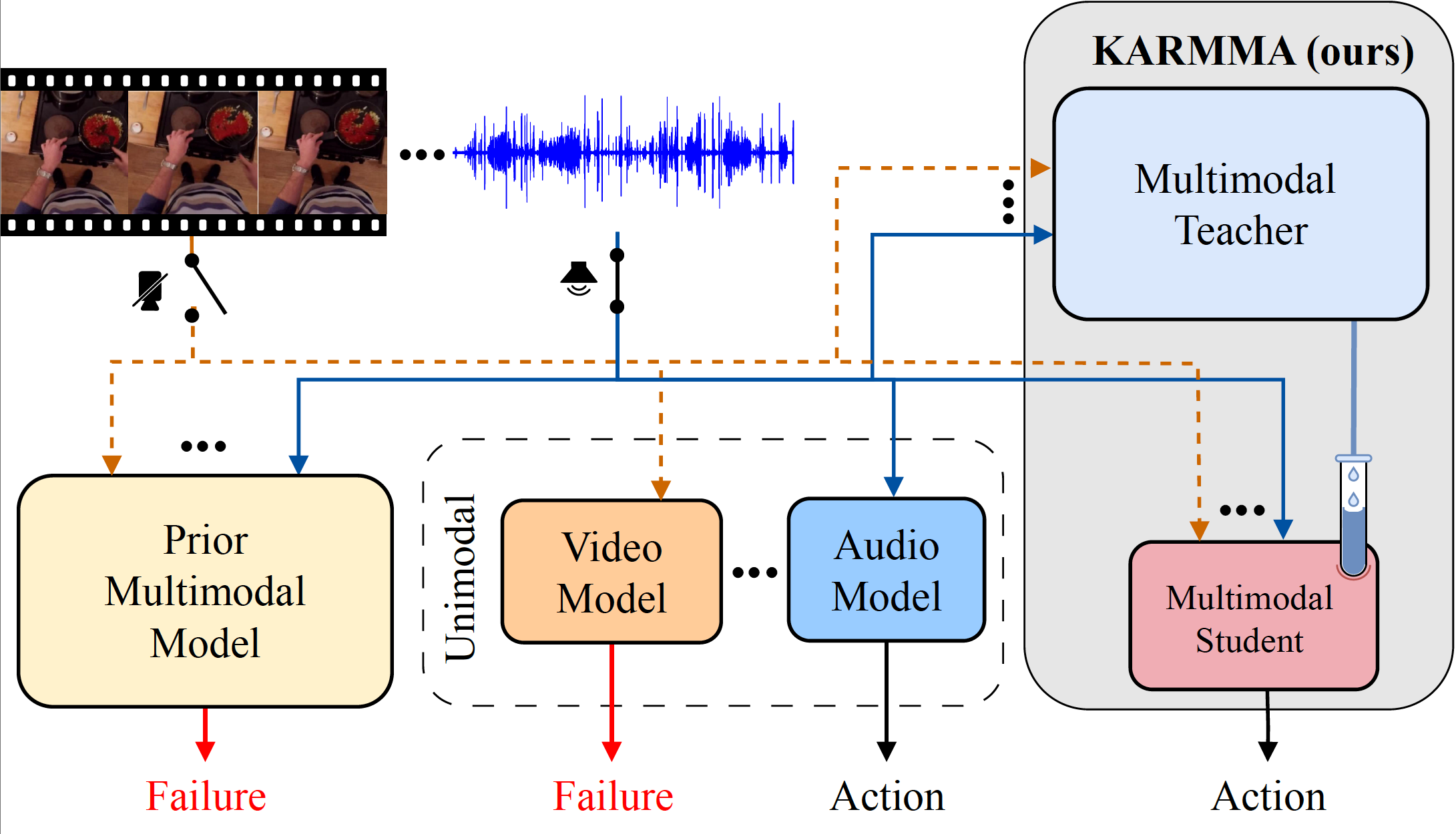
KARMMA multimodal teacher-student architecture

Multimodal Knowledge Distillation for Egocentric Action Recognition Robust to Missing Modalities

Dustin Carrión-Ojeda*, María Santos-Villafranca*, Alejandro Pérez-Yus, Jesús Bermúdez-Cameo, José J. Guerrero, Simone Schaub-Meyer

IEEE International Conference on Robotics and Automation (ICRA) · 2026 Also presented at the CVPR Workshop: Any-to-Any Multimodal Learning (A2A-MML) · 2026

KARMMA distills a multimodal teacher into a compact student that can use any available subset of modalities without retraining. On EPIC-Kitchens and Something-Something, it reduces the accuracy loss caused by missing sensors while using about 50% less inference memory than the teacher.
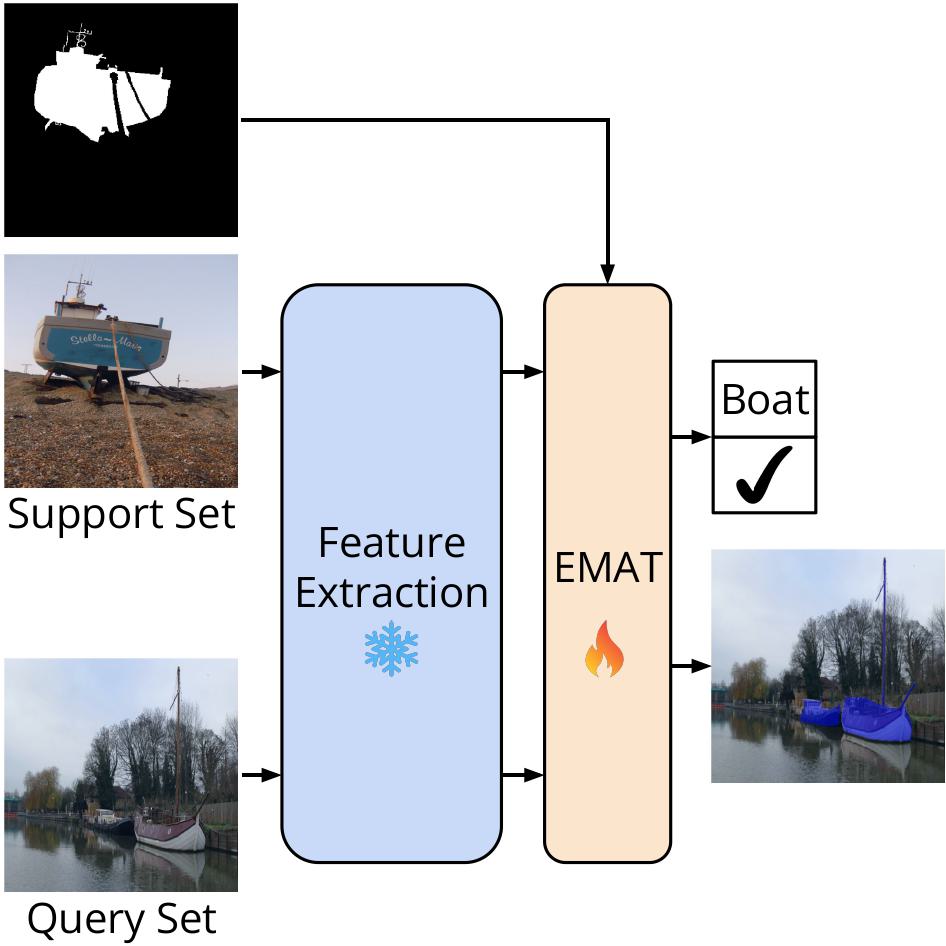
Comparison of EMAT and prior few-shot segmentation results

Efficient Masked Attention Transformer for Few-Shot Classification and Segmentation

Dustin Carrión-Ojeda, Stefan Roth, Simone Schaub-Meyer

German Conference on Pattern Recognition (GCPR) · 2025 Also presented at the ICCV Workshop: Representation Learning with Very Limited Resources: When Data, Modalities, Labels, and Computing Resources Are Scarce (LIMIT) · 2025

EMAT processes high-resolution correlation tokens with memory-efficient masked attention, improving few-shot classification and segmentation most strongly for small objects. It leads on PASCAL-5i and COCO-20i with at least four times fewer trainable parameters, and introduces evaluation settings that retain costly support annotations.

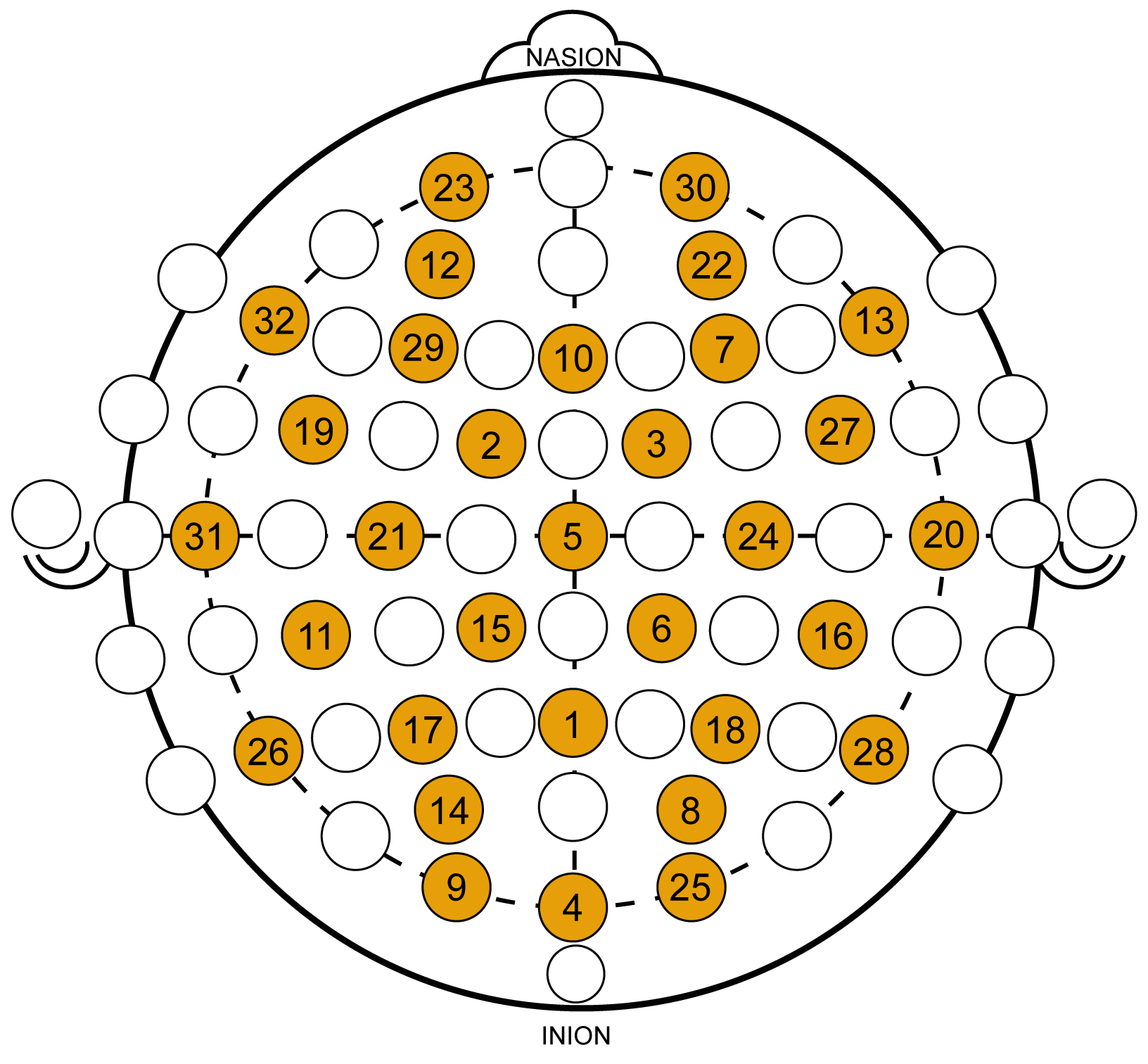
EEG electrode locations ranked for biometric identification

Evaluation of Features and Channels of Electroencephalographic Signals for Biometric Systems

Dustin Carrión-Ojeda, Paola Martínez-Arias, Rigoberto Fonseca-Delgado, Israel Pineda, Héctor Mejía-Vallejo

EURASIP Journal on Advances in Signal Processing · 2024

A two-dataset study of 19 wavelet, spectral, and complexity features across five classifiers. The standard deviation of three-level wavelet coefficients performs best; the proposed channel-selection method reduces one setup from 32 electrodes to 11 while maintaining performance.

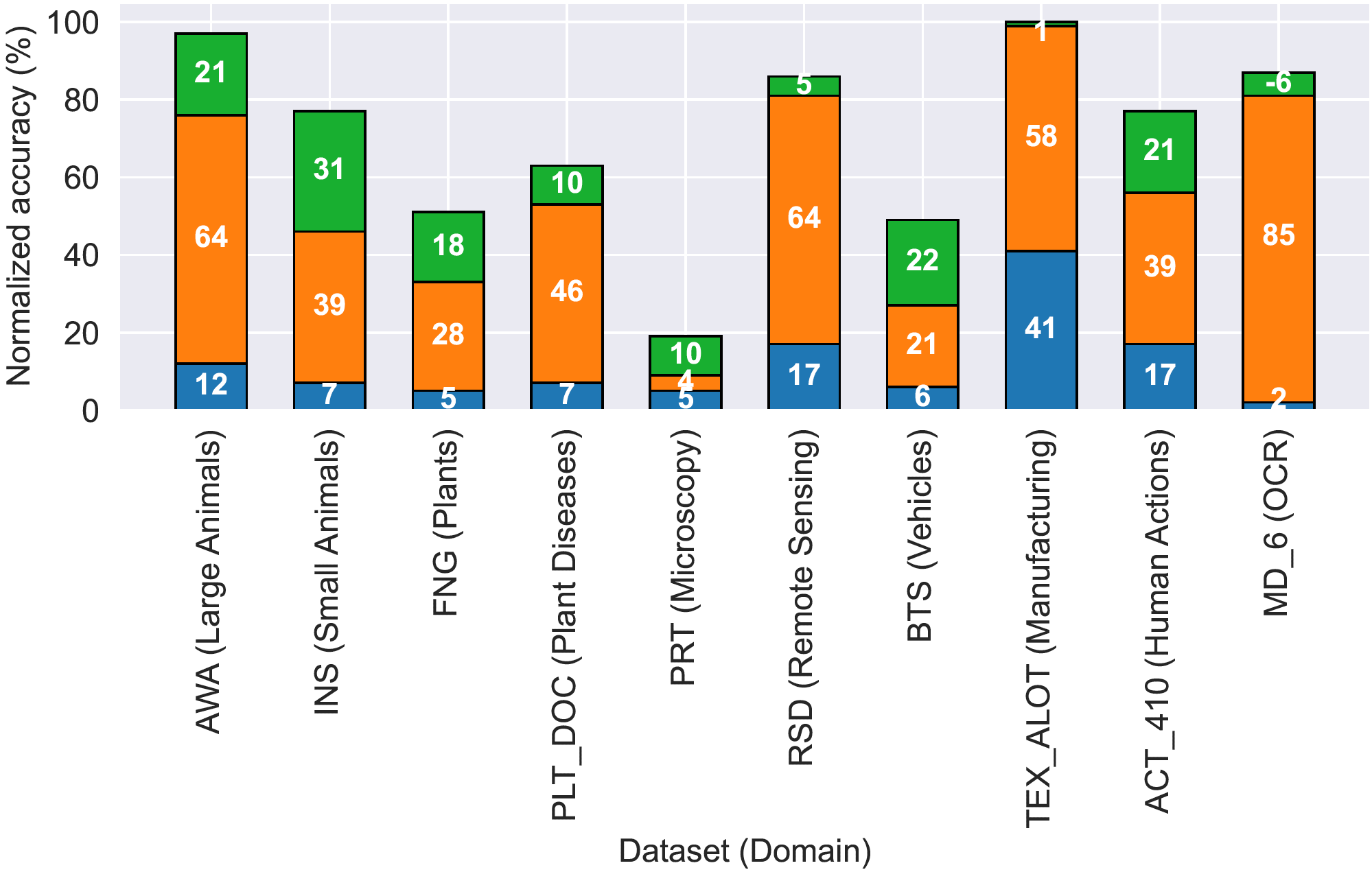
Cross-Domain MetaDL Challenge domains and winning methods

NeurIPS'22 Cross-Domain MetaDL Challenge: Results and Lessons Learned

Dustin Carrión-Ojeda et al.

NeurIPS 2022 Competitions Track, PMLR 220 · 2022 Also presented at the ICCV Workshop: LatinX in Computer Vision Research (LXCV) · 2023

The competition evaluates any-way, any-shot image classification across 10 domains and thousands of hidden tasks. Its analysis shows the importance of pre-trained backbones, overfitting control, and combining data augmentation or domain adaptation with careful optimization.

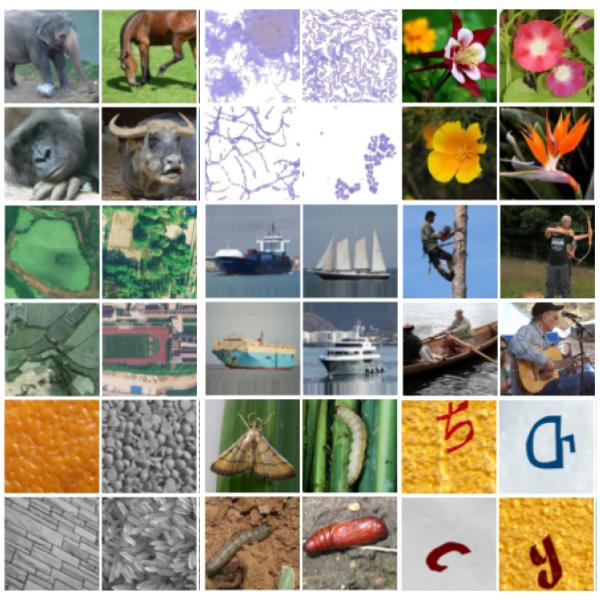
Example image classes from the Meta-Album benchmark

Meta-Album: Multi-domain Meta-Dataset for Few-Shot Image Classification

Ihsan Ullah*, Dustin Carrión-Ojeda*, Sergio Escalera, Isabelle Guyon, Mike Huisman, Felix Mohr, Jan N. van Rijn, Haozhe Sun, Joaquin Vanschoren, Phan Anh Vu

NeurIPS Datasets and Benchmarks Track · 2022

Meta-Album assembles 40 openly licensed image datasets from 10 domains in a common format, with Micro, Mini, and Extended variants for different compute budgets. It enables more realistic cross-domain, any-way, any-shot evaluation than conventional single-domain benchmarks.

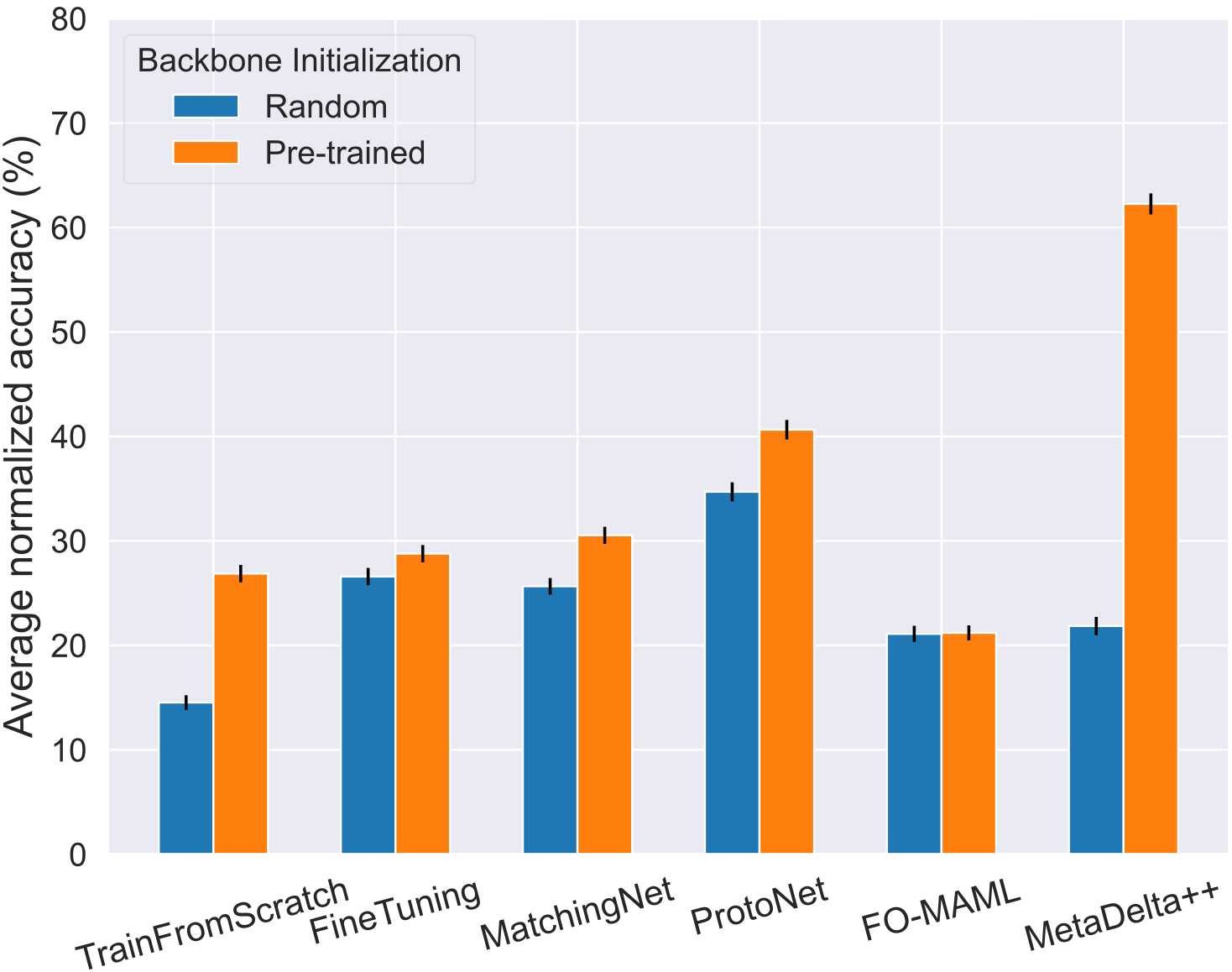
Cross-Domain MetaDL evaluation pipeline and baseline results

NeurIPS'22 Cross-Domain MetaDL Competition: Design and Baseline Results

Dustin Carrión-Ojeda, Hong Chen, Adrian El Baz, Sergio Escalera, Chaoyu Guan, Isabelle Guyon, Ihsan Ullah, Xin Wang, Wenwu Zhu

ECML/PKDD Workshop on Meta-Knowledge Transfer, PMLR 191 · 2022

This paper formalizes the challenge's cross-domain, any-way, any-shot setting and its hidden meta-test protocol. It establishes reproducible baselines spanning training from scratch, fine-tuning, and episodic meta-learning for fair comparison under limited data and compute.

EBAPy analysis workflow for EEG applications

EBAPy: A Python Framework for Analyzing the Factors that Have an Influence in the Performance of EEG-Based Applications

Dustin Carrión-Ojeda, Paola Martínez-Arias, Rigoberto Fonseca-Delgado, Israel Pineda

Software Impacts · 2021

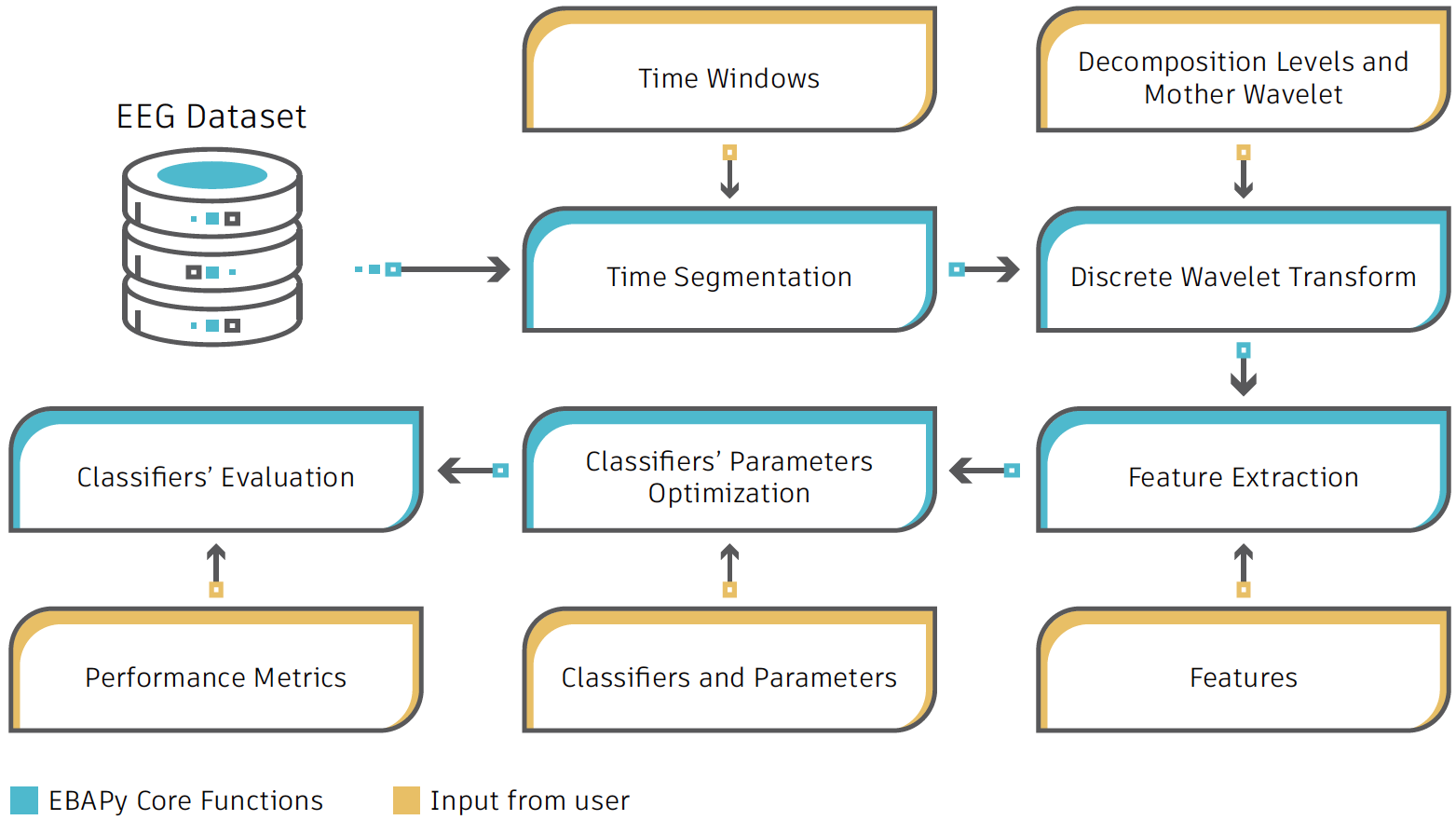
EBAPy turns repeated EEG experimentation into a reusable pipeline for time-windowing, wavelet preprocessing, feature extraction, model selection, and performance analysis. It exposes the trade-offs among recording duration, decomposition level, classifier quality, and computational cost.

EEG preprocessing and biometric-classification pipeline

Analysis of Factors that Influence the Performance of Biometric Systems Based on EEG Signals

Dustin Carrión-Ojeda, Rigoberto Fonseca-Delgado, Israel Pineda

Expert Systems with Applications · 2021 Also presented at the NeurIPS Workshop: LatinX in Artificial Intelligence Research (LXAI) · 2020

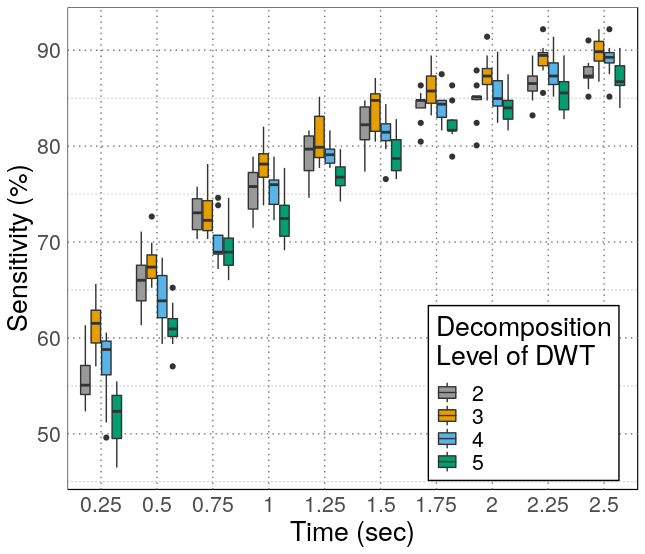
A controlled study across two datasets, six classifiers, multiple wavelet decompositions, and recording durations. It finds that duration matters more than decomposition depth, identifies SVM and AdaBoost as the strongest classifiers, and recommends 1.75 seconds as a practical recording window.

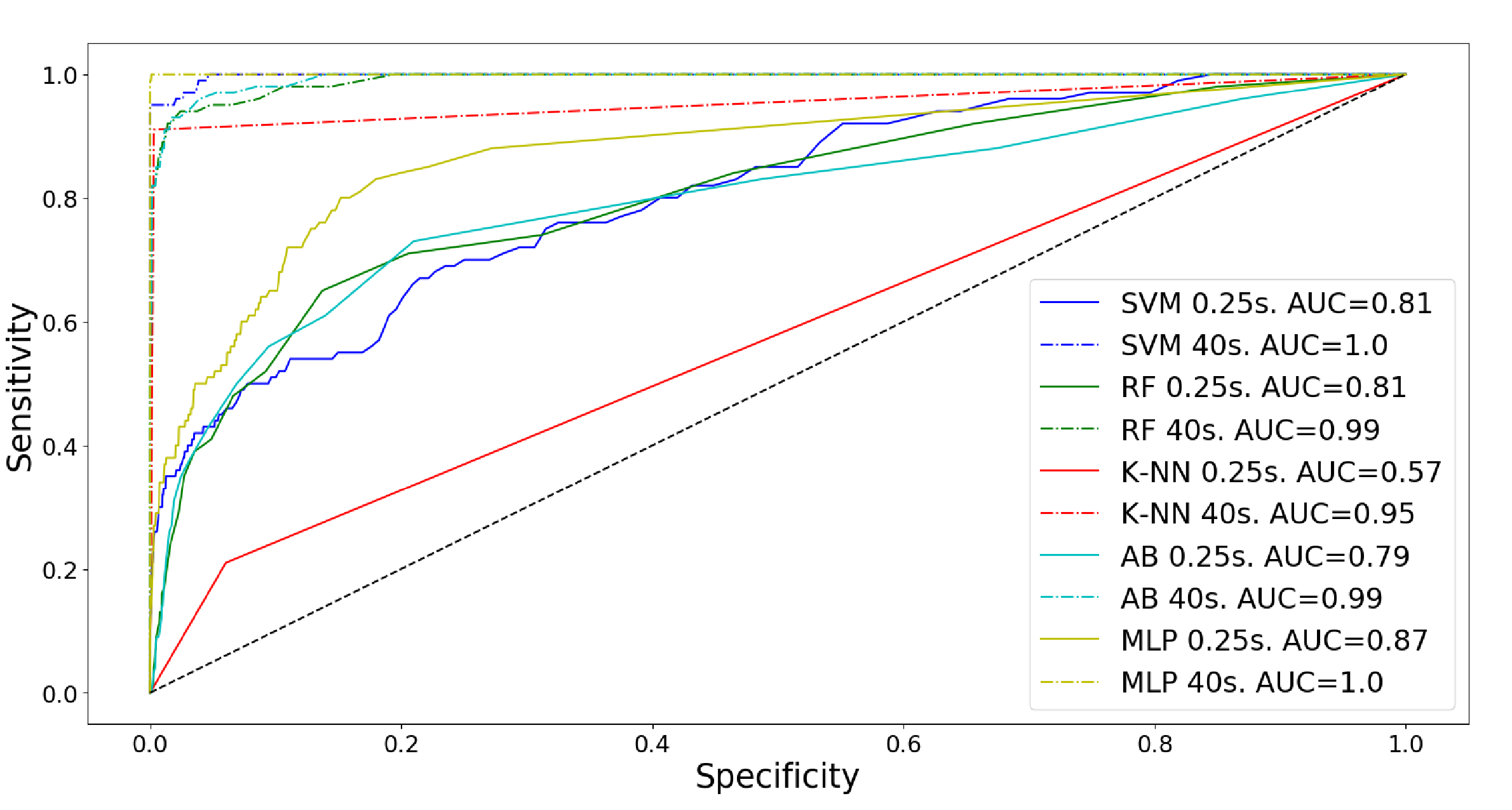
ROC curves comparing EEG biometric classifiers at 0.25 and 40 seconds of recording

A Method for Studying How Much Time of EEG Recording Is Needed to Have a Good User Identification

Dustin Carrión-Ojeda, Héctor Mejía-Vallejo, Rigoberto Fonseca-Delgado, Pilar Gómez-Gil, Manuel Ramírez-Cortés

IEEE Latin American Conference on Computational Intelligence (LA-CCI) · 2019 Also presented at the NeurIPS Workshop: LatinX in Artificial Intelligence Research (LXAI) · 2019

An early investigation of EEG recording length as a usability-performance trade-off in biometric identification. With discrete wavelet features, the system reaches about 90% accuracy from two seconds of signal, with accuracy improving as more recording time becomes available.

Publication thumbnail